Read the reply to GiddyUp during the Shiny Smile Veneers lawsuit below filed by Brighter Image Lab regarding false advertisement and misleading endorsements.
Reply To GiddyUp from Brighter Image Lab
IN THE UNITED STATES DISTRICT COURT
NORTHERN DISTRICT OF TEXAS
DALLAS DIVISION
| MSC DEVELOPMENT, INC., D/B/A BRIGHTER IMAGE LAB, | § § § | |
| Plaintiff/Counter Defendant, | § | |
| § | ||
| v. | § | CIVIL ACTION NO. 3:26-cv-02438-L |
| § | ||
| SHINY SMILE VENEERS, LLC AND THE GIDDYUP GROUP, INC., | § § § | |
| Defendants/Counter Plaintiff. | § |
Plaintiff/Counter Defendant’s Reply to Defendant/Counter Plaintiff The Giddyup Group, Inc.’s Brief in Opposition to Plaintiff’s Application for Injunctive Relief
TO THE HONORABLE JUDGE OF SAID COURT:
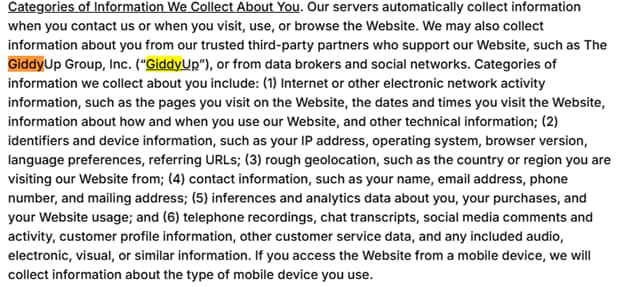
COMES NOW, Plaintiff/Counter Defendant MSC Development, Inc., d/b/a Brighter Image Lab, Inc. (“Plaintiff,” “Counter Defendant,” and/or “Brighter Image”), and files this Reply to Defendant The Giddyup Group, Inc.’s Brief in Opposition to Plaintiff’s Application for Injunctive Relief, and, for cause, would show unto this Honorable Court as follows:
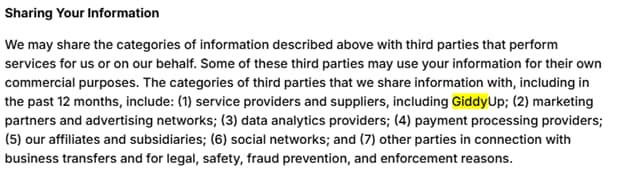
INTRODUCTION
1. Defendant The GiddyUp Group’s (“Giddyup” or “Defendant”) argument in its opposition mischaracterizes the pleadings and ignores detailed, verified allegations tying GiddyUp to the creation, management, and dissemination of deceptive marketing for Defendant Shiny Smile Veneers, LLC (“Shiny Smile”). The record establishes (1) specific false and misleading commercial statements, including fabricated professional personas, illegitimate organizations, and sham third‑party “review” platforms; (2) GiddyUp’s role in creating, managing, and disseminating the challenged ads and promotions; and (3) ongoing diversion of customers and injury to Brighter Image’s goodwill that cannot be fully remedied by damages. The Fifth Circuit preliminary‑injunction factors—likelihood of success, irreparable harm, balance of equities, and public interest—favor injunctive relief on this record.
2. Plaintiff’s Complaint and Application for Temporary and Permanent Injunction Relief (the “Complaint”) alleges that GiddyUp “provides advertising, marketing, website management, and digital promotional services for Shiny Smile Veneers, including creating, managing, and disseminating deceptive online advertisements and promotional content designed to increase consumer purchases.”[1]
3. Brighter Image observed a significant and unexplained decline in financing applications and completed transactions in September/October 2025, during which Defendants launched an aggressive nationwide digital advertising campaign across multiple platforms.[2] Defendant Giddyup Group maintains that there is no allegation of their creating or publishing the deceptive advertisements, clearly overlooking the allegations detailed in Plaintiff’s Complaint and Application for Temporary and Permanent Injunction Relief ¶ 22. The relevant section alleges that Giddyup assisted and encouraged Shiny Smile Veneers in creating false and deceptive materials that ultimately harmed Plaintiff’s business and reputation.
4. The Complaint alleges Giddyup helped create fabricated or AI‑generated “dentist” personas (including “Dr. Shams El Dean” and “Dr. Henry Dean”), sham endorsements and review entities (e.g., OSHF variants), AI‑generated testimonials and manipulated before/after images, and purportedly “independent” comparison sites that are clearly financed by Shiny Smile.[3] Defendant Giddyup’s actions thus contributed to misleading consumers and causing harm to Plaintiff in this case.
5. Despite the significant decline in Plaintiff’s business activities, public ad‑library data reflects hundreds to approximately a thousand active ads driving traffic to Shiny Smile during the relevant period, suggesting a correlation between the two events.[4]
6. The allegations in the Complaint are fully supported by evidence revealing the intricate web of fraudulent inaccurate and online marketing techniques peddling mediocre products and services to unsavvy consumers. Plaintiff is therefore able to demonstrate a likelihood of success on the merits of its claims, entitling it to injunctive relief under 15 U.S.C.A. § 1125, also known as the Lanham Act.
Legal Standard
7. GiddyUp agrees that in order to obtain injunctive relief the movant must establish: (1) substantial likelihood of success; (2) substantial threat of irreparable harm; (3) balance of harms; and (4) that the injunction will not disserve the public interest.[5] Defendant’s brief quotes and applies the Canal Authority/Clark factors as followed by this Court.[6]
8. Further, the Fifth Circuit Court of Appeals has interpreted the relevant section of the Lanham Act as providing “protection against a ‘myriad of deceptive commercial practices,’ including false advertising or promotion.” Seven–Up Co. v. Coca–Cola Co., 86 F.3d 1379, 1387 (5th Cir.1996) (quoting Resource Developers v. Statue of Liberty–Ellis Island Found., 926 F.2d 134, 139 (2d Cir.1991)).
9. A prima facie case of false advertising under section 43(a) requires the plaintiff to establish:
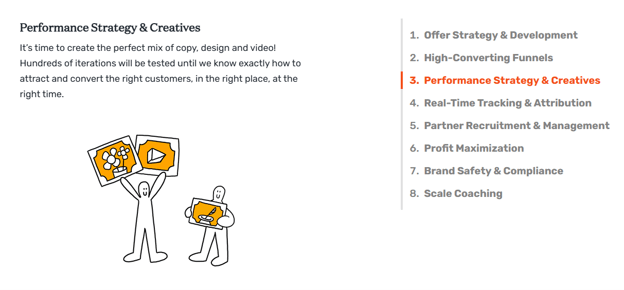
(1) A false or misleading statement of fact about a product;
(2) Such statement either deceived, or had the capacity to deceive a substantial segment of potential consumers;
(3) The deception is material, in that it is likely to influence the consumer’s purchasing decision;
(4) The product is in interstate commerce; and
(5) The plaintiff has been or is likely to be injured as a result of the statement at issue.
See Taquino v. Teledyne Monarch Rubber, 893 F.2d 1488, 1500 (5th Cir.1990); Cook, Perkiss and Liehe, Inc. v. Northern Cal. Collection Serv. Inc., 911 F.2d 242, 246 (9th Cir.1990); § 27:24. Elements of a prima facie case under Section 43(a)(1)(B) for false commercial representation, 4 McCarthy on Trademarks and Unfair Competition § 27:24 (5th ed.).
ARGUMENT
- Defendant’s threshold attacks on the pleadings and “conclusory” evidence misread the record and do not defeat likelihood of success.
10. GiddyUp’s argument that Plaintiff cannot succeed on the merits of its claim relies on the assumption that allegations in the Complaint are conclusory and that “Plaintiff has no evidence that Giddyup participated in any false statement.”[7]
11. However, Giddyup’s assertions overlook the verified, document‑backed allegations identifying specific false statements and creation of the promotional ecosystem amplifying them.
12. Rather than offering conclusory statements of fact, the Complaint identifies concrete misrepresentations: fabricated personas presented as licensed dentists tied to Shiny Smile; sham organizations (OSHF variants) used to manufacture “independent” validation; AI‑generated testimonials; manipulated before/after imagery; and comparison sites presented as independent parties that are materially connected to Defendants.[8] Defendants deceptive advertising even goes as far using Plaintiff’s own name and logo to depict distorted results in order to disparage Plaintiff and damage its reputation.[9] These misrepresentations have caused, and continue to cause, significant harm to Plaintiff, the dental industry, and consumers at large.
13. However, Giddyup states their position in their brief that: “there is no allegation, let alone any evidence showing that Giddyup created any advertisements for Shiny Smile Veneers.”[10] Not only is this position completely inaccurate, but it also demonstrates a bold attempt by Giddyup to convince this Court of a verified falsity.
- Plaintiff has produced evidence showing Giddyup was involved in the creation of the website getshinysmileveneers.com
14. Despite Giddyup’s assertion that there is no evidence of their role within Shiny Smile’s online advertising, the Privacy page found at the bottom of getshinysmileveneers.com (Shiny Smile’s home on the web) directly names Giddyup as a “trusted third-party partner who supports our Website.”
15. The Privacy provisions also acknowledge that Giddyup is a “third party platform” that “perform[s] services on our behalf.”[11]
16. A reasonable investigation upon the source code from getshinysmileveneers.com reveals several references to “window.giddyupTracking.offer”, “window.giddyupTracking.consent_mode”, and “window.giddyupTracking.house.” These lines represent the window in which the script from the website is running and demonstrate the Giddyup was involved in the creation of the Shiny Smile website.[12]

17. The fact that Giddyup is referenced by name on Shiny Smile’s website and within the underlying JavaScript clearly shows that Giddyup has a role in creating getshinysmileveneers.com. Looking to the description provided by Shiny Smile, Plaintiff can confirm that Giddyup “supports” the Shiny Smile website and “performs services” on its behalf.[13]
18. Indeed, Giddyup is known for their expertise in capturing website traffic for its affiliates and boasts their ability to “build, design, and launch everything from end-to-end.”[14] Giddyup now seeks to convince this Court that it had no role in creating the Shiny Smile ads while simultaneously promoting its ability to “build, design, and launch,” website content.
19. Even the Giddyup website explains their role as a Marketing Partner to “scale customer acquisition for the Brand across every online platform and international market available.”[15] Giddyup describes this as a “mutually beneficial ecosystem” between Brands, Marketing Partners, and Shoppers.[16] (This ecosystem and the larger deceptive marketing schemes involved are demonstrated below.)
20. Giddyups’s entire business model is described right on its homepage: “At GiddyUp, we help Brands and Marketing Partners (publishers, influencers, and agencies) drive profitable, scalable, and long-term revenue through performance-based partnerships and cutting-edge technology.”
21. Perplexingly, Giddyup seems to take the position it had no role in the false advertising alleged, apart from “providing marketing services. But again, Giddyup’s very own website describes the alleged marketing services: “Giddyup hand-picks, activates, and manages the perfect Marketing Partners for the Brand’s offer.”[17]

22. Giddyup argues it is an innocent publisher and offers the rule: “displaying an advertisement created by a third party should not be considered, in itself, the making of a false statement under the Lanham Act.” Outlaw Lab., LP v. Shenoor Enter., Inc., 371 F. Supp. 3d 355, 367 (N.D. Tex. 2019).
But Plaintiff has not alleged that Giddyup merely “displayed” false content, rather the Complaint explains that Giddyup was instrumental in building and designing the ecosystem of deceptive web pages causing ongoing harm to Plaintiff.[18] And these are exactly the types of activities Giddyup proudly offers to its clients.[19] This Court need look no further than Giddyup’s own website to realize that Giddyup is not in the business of merely “displaying” advertisements, and that it is heavily involved in the strategic planning and ongoing management of online content for its clients.[20]
23. Giddyup further states there is “no evidence that GiddyUp knew of, controlled, or materially participated in any specific false statement.”[21] This statement is simply incorrect. The self-proclaimed nature of Giddyup’s services, along with concrete evidence showing its involvement in creating the website getshinysmileveneers.com (the source of deceptive content in this case), materializes Plaintiff’s allegation that Giddyup was involved in the creation and publication of false online advertising.
- Websites associated with Giddyup and Shiny Smile contain verifiably false information, such as faux doctor recommendations and evaluations from fake third-party organizations.
24. Plaintiff is able to produce a substantial amount of evidence showing advertisements created by Giddyup and Shiny Smile contain verifiably false information and highly misleading statements.
25. To begin, multiple sources refer to “Dr. Shams El Dean” as the co-founder of Shiny Smile Veneers.[22] However, the National Plan and Provider Enumeration System displays “No matching records found.” upon searching for “Dr. Shams El Dean.”[23] A parallel search of the Texas Board of Dental Examiners License Lookup also displays zero results.[24] If Dr. Shams El Dean is truly the co-found of Shiny Smile Veneers (which utilizes the address 1110 Commerce Dr, Richardson, 75081) [25], then there is no reasonable explanation as to why Dr. Shams El Dean is not listed in the Texas Board of Dental Examiners database.
26. Creating these types of personas is just one part of the tailored services Giddyup offers, suggesting that the fictional doctors were born out of the “Performance Strategy and Creatives” offered by Giddyup.[26]
27. Beyond the abundance of evidence demonstrating Defendants’ promotion of phony medical doctors in their advertisements, Plaintiffs have relied on publicly available websites and related material to allege that the organizations named in Defendants’ marketing scheme have no verifiable history as being legitimate independent healthcare groups.[27]
28. This includes, among dozens of similar websites, an article on the National Law Review page that appears to be produced by the “Consumer Reports Oral and Senior Health Foundation” and awards Shiny Smile Veneers with “top recognition” for the quality of its product.[28] Evaluation for this designation is claimed to be based on five factors commonly relevant to senior individuals, and OSHF claims that it “conducts independent evaluations of dental and health products specifically relevant to aging populations.” OSHF further claims, “the organization receives no funding from product manufacturers and purchases all evaluated items at retail price to ensure unbiased assessment.”[29]
29. However, when the consumer attempts to access the “complete 45-page evaluation” which appears at first glance to exist at a website affiliated with OSHF (https://oshf.ca/consumer-report-best-snap-on-veneers-of-2025/), they are directed to the purchase page of the Shiny Smile Veneers website.[30]

30. Opening the Developer Tools on a web browser will allow the user to view the requests made when interacting with various webpages.[31] In this case, one can see that when requesting to visit the OSHF website (link seen under the Network tab in the blue address bar) automatically triggers a second request that redirects the user to the Shiny Smile website (“Using domain getshinysmileveneers.com” seen under the Console tab on the bottom right).[32]
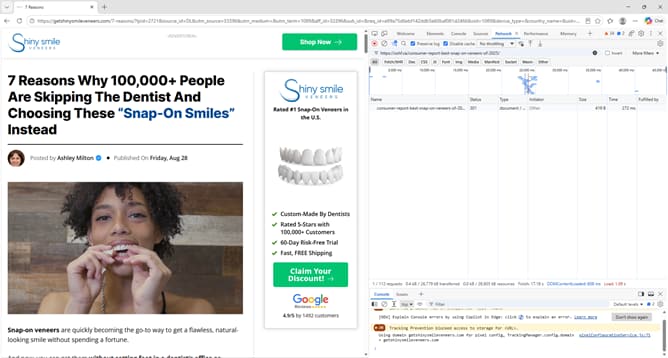
31. Importantly, this link appears to be part of main URL “oshf.ca.” Consumers might naturally assume that the letters “oshf” in the main URL represent the Oral and Senior Health Foundation that supposedly published this evaluation. But, in order for the “45-page evaluation” link to actually take the user to the Shiny Smile website, the owner and creator of the oshf.ca link would have to create that redirect. Since the redirect is triggered by a script served from oshf.ca’s own page, the redirect request had to be written into oshf.ca’s own site files — meaning whoever has publishing access to oshf.ca is responsible for placing it there.[33]
32. The fact that this link (part of the main url oshf.ca) links directly back to the Shiny Smile website undeniably proves that these two websites were created by the same, or related, entities. And, as demonstrated above, the redirect link specifically names Giddyup as a third party who “supports” and “provides services” for the website.[34]
33. This evidence calls into question the authenticity of the Oral Senior and Health Foundation, and the accuracy of their claim to be an “independent organization” that “receives no funding from product manufacturers.”[35]
34. The mysterious OSHF also claims to have identified category leaders based on specific needs, but only lists the name of one company, and each of the three links direct the user to the same purchase page on the Shiny Smile Veneers website.
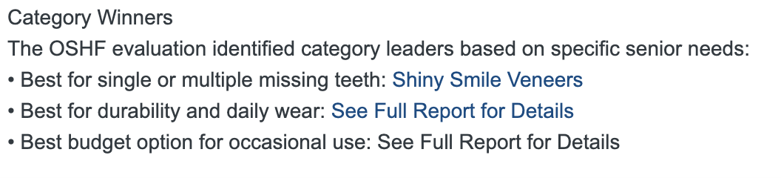
35. Plaintiffs have identified several websites that follow the same predictable formula: promote a seemingly comprehensive and unbiased evaluation by OSHF, name only Shiny Smile Veneers as the industry leader, and mislead users by offering links to independent sources that route back to the Shiny Smile Veneers purchase page.[36]

36. These links reporting to offer the “complete findings” appear at first sight to be associated with the group OSHF, containing the same initial url: “OSHF.ca.” But once again, the user attempting to access these findings is redirected to the Shiny Smile purchase page. And the only possible way that this link would redirect the user back to the Shiny Smile purchase page is if the owner of the OSHF.ca domain created the link to do so.
37. Website publishers where OSHF promotes its “rigorous evaluation” even disclaim any liability regarding accuracy, attempting to distance themselves from legal exposure related to publishing false information.[37]

38. Despite a complete lack of evidence to verify the existence or authenticity of the “comprehensive evaluation,” by the “independent third party” OSHF, Shiny Smile relies on the data from “Consumer Reports by the Oral Health and Senior Foundation” in its paid advertising:[38]
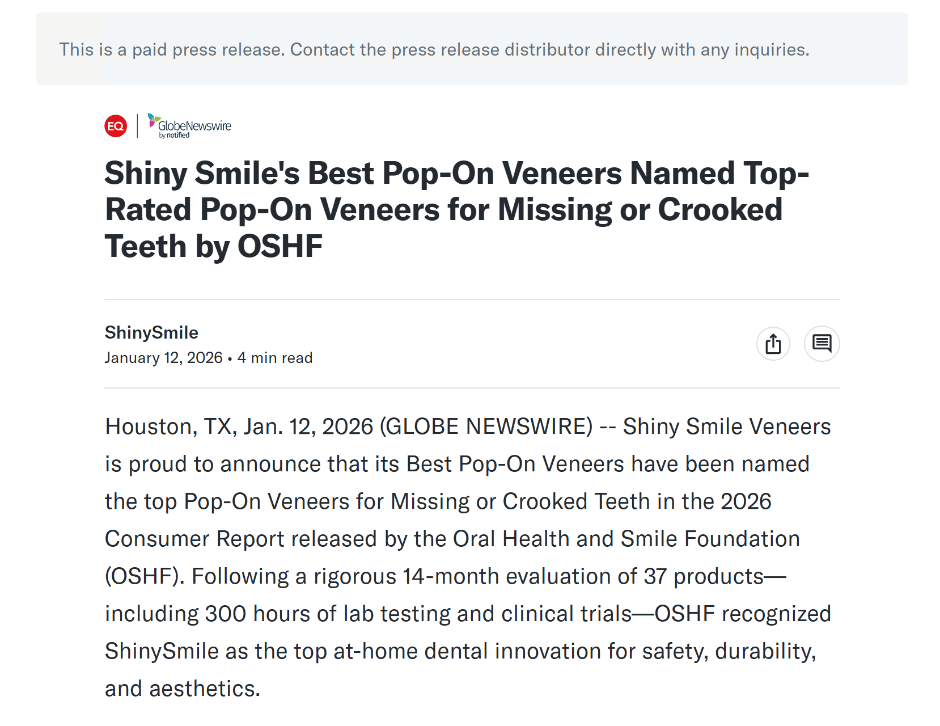
39. Depiction of this “organization” and its supposedly unbiased recommendations allows Defendants to falsely profess independent third-party verification in order to legitimize itself in the eyes of its target customers, namely senior individuals.[39]
40. But exactly what is OSHF (the Oral Senior and Health Foundation described in Shiny Smile ads), and how can consumers access the “rigorous evaluation” that is consistently referenced in articles praising Shiny Smile? All of the articles found offer users some variation of the main “oshf.ca” URL website for access to this evaluation.[40]
41. Utilizing publicly archived internet files, one can deduce that the website OSHF.ca was launched on January 10, 2010, by the Ontario Society for Health and Fitness.[41] The Ontario Society for Health and Fitness was a non-profit organization was dedicated to promoting wellness in Ontario Canada, but its status has been inactive since April of 2023.[42]
42. By September 8, 2023, the domain for oshf.ca became available for purchase.[43]
43. The website was unused until December 4, 2024, when it was purchased and re-launched under the same name, but with a dramatically different logo.[44]
44. Confusingly, the Ontario Society for Health and Fitness name and information still appear on the website, not the Oral and Senior Health Foundation as represented in the aformetioned articles.[45]
45. The articles described above naturally lead consumers to believe that the link claiming to provide an in-depth expert report by the Oral and Senior Health Foundation would be associated with that organization, especially considering the acronym OSHF appearing in the main URL. Once again, Plaintiffs have produced evidence challenging the authenticity and reliability of “independent organizations” mentioned in Shiny Smile advertisements.
46. Despite OSHF claiming to be a not-for profit organization dedicated to enhancing wellbeing in its community, its new website promotes a “new venture into medspa services” including Botox and hair loss treatments.[46]
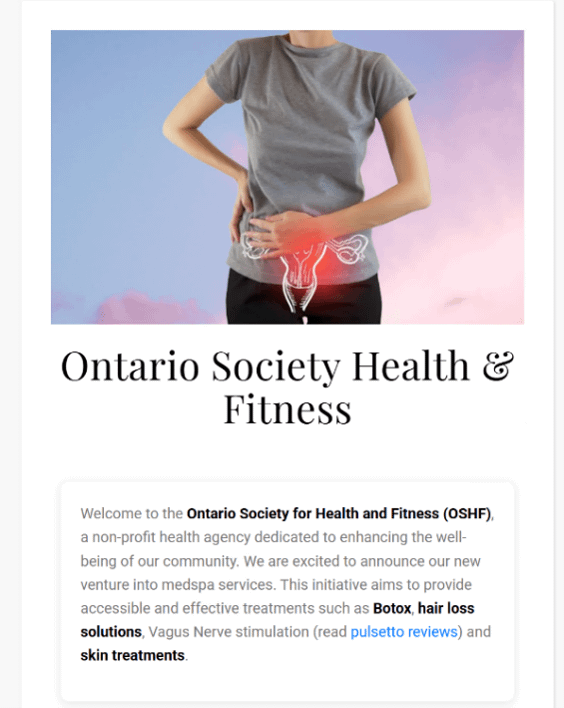
47. As the Ontario Society for Health and Fitness has been inactive for over three years,[47] and as medspas are not typically operated as non-profit organizations, Plaintiff has again produced evidence challenging the legitimacy of this website and its creator.
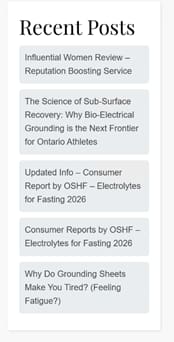
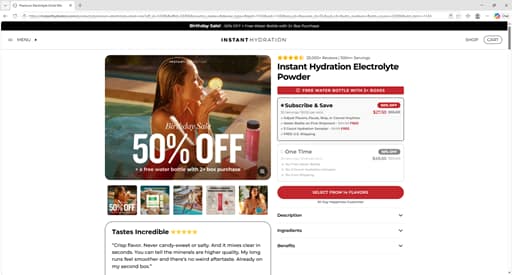
48. Interestingly, recent posts on the “oshf.ca” website provide links to articles by “Consumer Reports OSHF,” but instead of providing information regarding the Consumer Reports Oral Health and Senior Foundation identified in Shiny Smile ads, these links take the user to a page where they can purchase “electrolytes for fasting.”[48]
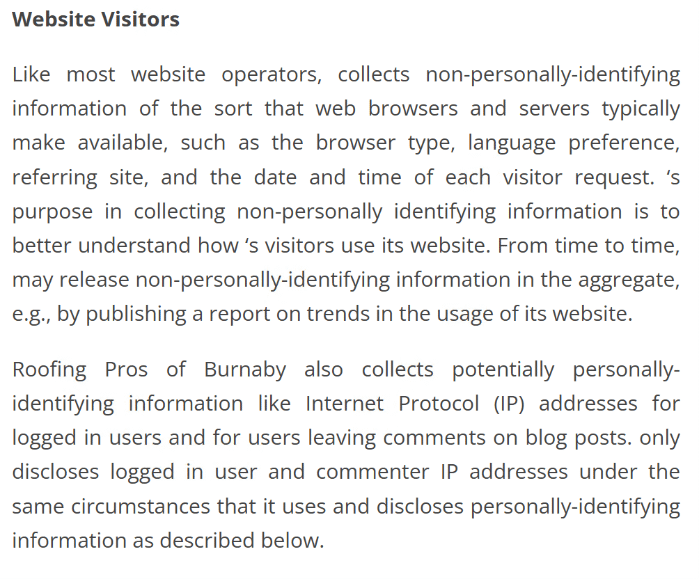
49. Additionally, the Privacy Policy on the OSHF website refers to a party named “Roofing Pros of Burnaby” in multiple provisions.
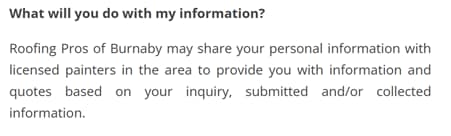
50. Provisions within the OSHF Privacy Policy page also reference “Pelvic Floor Physiotherapy Clinic of Mississauga,” also seen at the bottom of the website next to “Ontario Society of Health and Fitness.” (Note that Mississauga is located in Ontario, Canada while Burnaby is located in British Columbia, approximately 2,709 miles away or a 37.5 hour journey).[49]
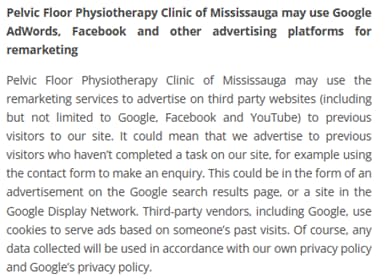
51. It appears that the Privacy Policy used by OSHF was created using a generic template, wherein the name of the company can be easily filled in. This is confirmed by other provisions that seem to have a blank space where the company name should be.
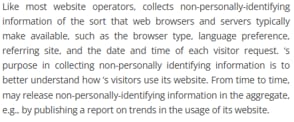
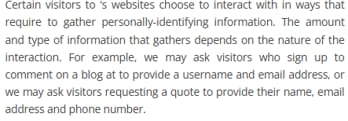
52. Clearly, all of these websites offering random products and services (Ontario Society for Health and Fitness, “electrolytes for fasting,” pelvic floor clinic, Burnaby roofing) are maintained by the same party, or related parties, using generic templates across multiple platforms. And these websites obviously rely on each other for advertising and driving traffic. In fact, one might say they are apart of a “mutually beneficial ecosystem between Brands, Marketing Partners, and Shoppers,” which is precisely the sort of service that Giddyup claims to provide.[50]
53. As explained above, diversion from the “ushf.ca” links offering an “independent, 45-page evaluation” to the Shiny Smile website is an intentional redirect that can only occur if the “oshf.ca” owner configures the link in such a way.[51] Therefore, whoever is operating the “Ontario Society for Health Fitness” website purposefully created these redirect requests, and they must necessarily know that their URL is being used in connection with the name “Oral and Senior Health Foundation” where the links are published.
54. Why does the main “oshf.ca” homepage represent the “Ontario Society for Health Fitness” but all of the webpages advertising Shiny Smile refer to the URL as belonging to the “Oral Senior and Health Foundation”? Additionally, why do the “independent evaluation” links redirect consumers to the Shiny Smile purchase page? Finally, why are there so many unexplained elements on the URL, including references to “Burnaby Bros Roofing” and “electrolytes for fasting”?
55. The only reasonable explanation here is that OSHF is a fictional organization imitating a now defunct non-profit from Canada, and the Defendants are masking their online content with the fictional group’s identity to deceive customers and promote their various other scams.
56. Plaintiff’s allegations that Giddyup was involved in the creation and management of false and misleading advertisements for Shiny Smile are thus entirely supported by undeniable evidence linking these groups together and demonstrating the inauthenticity in the content they produce.
57. The above evidence resolves any doubt concerning Plaintiff’s allegation against Giddyup: that they are in the business of engineering complex marketing schemes to seed the internet with seemingly authentic reports and articles with the intent to mislead consumers.
58. After falling down a rabbit hole of different entities and sale offers, the user is still unable to find the original “Oral Senior and Health Foundation” report Shiny Smile Veneers touts in their advertisements and is left with even more questions regarding ownership and intention of the “oshf.ca” domain.
59. The Complaint further pleads each element of false advertising under Section 43(a): specific false or misleading statements; capacity to deceive; materiality; use in interstate commerce via nationwide digital campaigns; and resulting injury in diverted sales and goodwill harm.[52] GiddyUp’s reliance on an anticipated Rule 12(b)(6) motion does not undercut the clear showing required here; on this verified record, Plaintiff has shown a substantial likelihood of success by alleging conduct related to each element under Section 43(a).
- Plaintiff has produced evidence exceeding the standard to demonstrate a likelihood of success on the merits and is entitled to injunctive relief
60. A prima facie case of false advertising under section 43(a) requires the plaintiff to establish:
(1) A false or misleading statement of fact about a product;
(2) Such statement either deceived, or had the capacity to deceive a substantial segment of potential consumers;
(3) The deception is material, in that it is likely to influence the consumer’s purchasing decision;
(4) The product is in interstate commerce; and
(5) The plaintiff has been or is likely to be injured as a result of the statement at issue.
61. Plaintiff has produced an abundance of evidence demonstrating the use of false statements in Shiny Smile advertisements, including impersonation of medical doctors, affiliation with phony health organizations, and promotion of non-existent independent evaluations all with the intent to deceive their target customer base: senior individuals. Plaintiff has further produced considerable evidence that undeniably illustrates Giddyup’s role in this intentional deception. There can be no doubt that Plaintiffs have established the first element of their claims.
62. As to the second element, Plaintiff has shown that Shiny Smile falsely advertises that it’s founder is “Dr. Shams El Dean” and that it is recommended by the “independent third party” known as the Oral and Senior Health Foundation (which Plaintiff has shown to be not only completely fictious but directly associated with Shiny Smile). This is sufficient to demonstrate consumer deception.
63. Under the Lanham Act, when the statements of fact at issue are shown to be literally false, the plaintiff need not introduce evidence on the issue of the impact the statements had on consumers.[53] In such a circumstance, the court will assume that the statements actually misled consumers.[54]
64. Because Plaintiff has shown the statements of fact in this case to be literally false, they “successfully demonstrated that they either deceived, or had the capacity to deceive a substantial segment of potential consumers.” After all, the Shiny Smile veneers ads specifically name seniors as their target audience, and impersonation of medical doctors and fake health organizations via a network of articles and websites is certain to deceive the average senior individual. These misrepresentations are directly related to the quality and safety of Shiny Smile products; thus, they are material and highly likely to influence the customer’s purchasing decision.
65. Further, Shiny Smile products are sold through interstate commerce via website sales.[55] The false and misleading ads also include fake comparison photos that attempt to portray Plaintiff’s product as inferior while brandishing Plaintiff’s official logo.[56]
66. In Better Business Bureau of Metropolitan Houston, Inc. v. Medical Directors, Inc., the Fifth Circuit affirmed a preliminary injunction under Lanham Act § 43(a) where a weight-loss clinic’s advertisements falsely described the plaintiff by name, claiming that client “testimonials” had come from individuals acting as the Bureau’s own “investigators” a representation the court found actually false and calculated to create the misleading impression that the Bureau endorsed the clinic’s program.[57]
67. Because the advertisements directly invoked the plaintiff’s name in connection with false factual claims about its involvement, the court held this was sufficient to establish a likelihood of confusion and a threat of irreparable harm to the plaintiff’s reputation, warranting injunctive relief without any need to show actual consumer confusion.[58]
68. Better Business Bureau of Metropolitan Houston, Inc. v. Medical Directors, Inc., is directly analogous here: like the defendant clinic, Defendants have promoted materially false statements while expressly invoking Plaintiff’s and image in fabricated comparison photos, which under the Fifth Circuit’s reasoning is exactly the kind of false, plaintiff-specific representation that supports a preliminary injunction. This Court should accordingly find Better Business Bureau of Metropolitan Houston, Inc. persuasive and grant Plaintiff’s request for injunctive relief.
69. As demonstrated above, Plaintiff has exceeded its burden of demonstrating a likelihood of success on the merits of its claims and has provided ample evidence establishing each of the necessary elements.
- Giddyup’s reliance on Joseph Paul and similar cases is misplaced on these facts.
70. GiddyUp argues this Court denied injunctions where harms were conclusory or delayed and cites Joseph Paul and other authorities.[59]
71. Here, Plaintiff’s verified Complaint supplies detailed, document‑anchored allegations and exhibits showing specific false statements, their dissemination channels, and ongoing campaigns. The allegations are supported by screenshots, license‑registry lookups, disclosures from the purported “independent” sites, and ad‑library records.[60]
72. In Joseph Paul, the court found that allegation related to potential harm to customers was “purely speculative,” and that there was no evidence of the alleged infringers product actually being inferior. Joseph Paul Corp., 2016 WL 4944370, at *15. The issue in that case concerned the alleged use of copyrighted material to infringe on the plaintiff’s original work and gain an economic benefit.[61]
73. In the present controversy, however, does not involve the question of harm relating to the infringing use of copyrighted material. Instead, the harm suffered by Plaintiff results from Defendants’ publication of outright false and misleading information.[62] These cases present two separate claims and the resulting injuries for each claim stem from entirely different types of behavior. Defendant has not shown how the speculation argument in regard to harm is applicable to the analysis of these distinct claims and thus is misguided in its use of Joseph Paul.
74. Plaintiff has produced evidence showing that marketing claims made by Defendants are patently false, based on testimony from fabricated doctors and health organizations, and directly attack Plaintiff’s business practices. On this record, Plaintiff’s showing is particularized and current, not speculative and Plaintiff is therefore entitled to injunctive relief.
- Plaintiff is entitled to equitable relief because the statements are literally false,
75. In order to obtain monetary damages or equitable relief in the form of an injunction, “a plaintiff must demonstrate that the commercial advertisement or promotion is either literally false, or that [if the advertisement is not literally false,] it is likely to mislead and confuse consumers.”[63] In addition a plaintiff must also show that it will suffer irreparable harm if the injunction is not granted.[64]
76. Here, Plaintiffs have provided ample evidence to show that Shiny Smile and Giddyup are conspiring to generate and promote advertisements featuring phony medical professionals and promoting illegitimate third-party evaluations.
77. Defendants’ use of false statements, including imitation of medical doctors and fake analytical reports by nonexistent health organizations, allows this Court to assume that customers have been misled, and entitles Plaintiff to receive equitable relief.[65]
- Defendant’s irreparable‑harm arguments fail because ongoing loss of customers and goodwill from deceptive campaigns is irreparable and supported by controlling authority.
78. Plaintiff has provided verification for the statements alleged and several exhibits demonstrating the false and misleading nature of Defendants’ publications.[66] At this stage, those verified allegations and exhibits suffice to show a substantial likelihood that GiddyUp materially participated in and disseminated the challenged statements, satisfying the Lanham Act’s commercial‑advertising elements and proximate cause as pleaded. (See Brink’s Inc. v. Patrick, No. 3:14–CV–0775–B, 2014 WL 2931824, at *8 (N.D.Tex. June 27, 2014, stating: “A party sufficiently proves that monetary damages are not adequate when it brings forward evidence, in the form of affidavits, declarations, or any other support, that shows imminent harm that is difficult to quantify.”)
79. GiddyUp asserts Plaintiff’s irreparable‑harm showing is speculative and purely economic, and claims delay from fall 2025 to July 2026 defeats urgency.[67] This assertion is unsupported by the record in this case and contradicts judicial precedent.
80. In McNeilab, Inc. v. Am. Home Products Corp, the Second Circuit considered the issue of harm arising out of a false, non-comparative advertising claim and false comparative advertising claim under the Lanham Act.[68] The Second Circuit opined that injury can be presumed from a false comparison because it will necessarily lead consumers to take a different view of the product then before they had seen the advertisement and therefore no proof of injury is necessary.[69] Therefore, a false advertisement necessarily results in irreparable harm because it diminishes the value of the targeted company’s product or service in the mind of the consumer.[70] Conversely, when a false advertisement does not expressly or impliedly reference a competitor’s product, it would not have the diminishing effect that a comparative advertisement inflicts, thereby making the presumption speculative.[71]
81. The court’s analysis and finding regarding harm in McNeilab, Inc. is controlling here. Plaintiff has produced evidence of Shiny Smile’s advertisements using Plaintiff’s name and logo to portray a false comparison substantiated by demonstrably false statements and misleading tactics.[72] These false comparisons will “necessarily lead consumers to take a different view of the product then before they had seen the advertisement” and thus does not require proof of injury to establish harm.[73]
82. Again, Defendant relies on Joseph Paul to argue against irreparable harm, but that case involves a competitor infringing on copyrighted elements of the plaintiff’s original work to gain an economic benefit. The claims in this case differ significantly in that Plaintiff alleges that Defendant has created and published verifiably false statements that cause harm to Plaintiff.[74]
83. And Texas federal courts recognize that even where products or services continue to enjoy strong reputations in the market, those products or services would suffer irreparable harm in the absence of an injunction preventing a competitor from continuing to make disputed advertising claims challenged as false under the Lanham Act.[75] This is especially true of the ongoing potential harm if defendants continue making similar statements through difficult-to-monitor channels, such as direct advertising via emails to customers. See ICEE Distribs., Inc. v. J & J Snack Foods Corp., 325 F.3d 586, 596–97 (5th Cir.2003) (injunction warranted to prevent future sale of product because damages would be difficult to prove); Fresh Del Monte Produce v. Del Monte Foods Co., 933 F.Supp.2d 655, 664–65 (S.D.N.Y.2013) (injunction warranted in false advertising case where jury found no lost sales, because the extent of injury was difficult to measure).
84. In Eastman Chem. Co. v. PlastiPure, Inc., the jury found defendants’ statements were literally false and thus the ability of those statements to impact consumers’ purchasing decisions was presumed.[76] On appeal, the court noted that it is likely impossible to quantify the extent of the harm plaintiff suffered as a result of defendants’ false advertisements, which weighed in favor of a finding of irreparable harm.[77]
85. Plaintiff here has produced ample evidence demonstrating the false and misleading statements within Defendants’ advertising, which are used to promote disputed advertising claims concerning comparison to Plaintiff. Under the reasoning in Eastman Chem. Co and McNeilab, Inc., Plaintiff has demonstrated that it will suffer irreparable harm in the absence of injunctive relief in this case.[78]
- The balance of equities and public interest strongly favor tailored injunctive relief.
86. Plaintiff seeks to restrain specific categories of deceptive practices which cause irreparable harm to its business, including false professional licensure and endorsements; AI‑generated fictitious personas/testimonials; manipulated before/after imagery; undisclosed sponsored “independent” rankings; and false disparagement, while permitting truthful, substantiated advertising.[79]
87. Texas federal courts have consistently found the balance of hardships under a Lanham Act inquiry to favor plaintiffs when defendants face only a minimal burden in ceasing or correcting their false advertising.[80] Additionally, the public has a strong interest in the enforcement of the Lanham Act’s prohibition on false advertisements and will suffer no harm because defendants’ legitimate business pursuits will be unaffected by the terms of the injunction.[81]
88. Enjoining deceptive conduct imposes no cognizable hardship on GiddyUp while continuing deception harms Brighter Image and consumers. Furthermore, the public interest factor in this case strongly supports injunction as Defendants are shown to promote patently false and fictitious claims regarding endorsement by licensed medical doctors and non-profit health organizations. These advertisements even identify their target audience: senior individuals. Certainly, the interests of senior individuals would be best served by enjoining Defendants from continuing their manipulative and deceptive marketing practices.
89. The balance of equities and public interest factors in this case therefore strongly support Plaintiff’s request for injunctive relief.
CONCLUSION
90. Plaintiff respectfully requests that the Court grant its application/motion, enter a temporary injunction pending further proceedings, and upon final judgment enter permanent injunctive relief, as follows:
- Enjoin Defendants, including GiddyUp, from:
- a. Representing professional licensure/endorsements absent truth and substantiation as pleaded;
- b. Using AI‑generated or fictitious “dentists” or users in endorsements/testimonials;
- c. Using manipulated before/after imagery not representative of typical results;
- d. Publishing or causing undisclosed sponsored “independent” rankings/comparison sites; and
- e. Publishing false or misleading disparagement of Plaintiff or its products.
- Order prompt takedown and a compliance report consistent with Plaintiff’s request. Plaintiff seeks removal within ten days and a sworn compliance report within thirty days.
- Set nominal security as the Court deems just. Plaintiff requests only a nominal bond for interim relief.
Respectfully submitted,
FRIEDMAN & FEIGER, L.L.P.
/s/ Jason H. Friedman
By:_________________________
Jason H. Friedman
State Bar No. 24059784
Paige A. Hawkins
State Bar No. 24130788
17304 Preston Road, Suite 300
Dallas, Texas 75252
(972) 788-1400 (Telephone)
ATTORNEYS FOR PLAINTIFF
[1] Plaintiff’s Complaint and Application for Temporary and Permanent Injunction Relief ¶ 18.
[2] Id. ¶¶ 19–21.
[3] Id. ¶¶ 22–38, 35–37; Exs. A–I.
[4] Id. Ex. G.
[5] Illinois Tool Works, Inc. v. Rust-Oleum Corp., 955 F.3d 512, 517 (5th Cir. 2020).
[6] Defendant The Giddyup Group, Inc.’s Brief in Opposition to Plaintiff’s Application for Injunctive Relief. at 2–3.
[7] Id. at 3–5.
[8] Compl. ¶¶ 22–37; Exs. A–F, H–I.
[9] Compl. ¶¶ 37–38.
[10] Def. Opp. at 4–5.
[11] https://getshinysmileveneers.com/offer-01-j/?oid=1089&gu_id=2a336764-469d-450f-809a-dd68b617df0f&pg=cb&aff_id=11258&affid=11258&req_id=d7deb820b2df49ecab23822cbfd355f2#offer
[12] Exhibit B; See also: https://developer.mozilla.org/en-US/docs/Web/API/Window, explaining the “Window” interface within JavaScript Code.
[13] https://getshinysmileveneers.com/offer-01-j/?oid=1089&gu_id=2a336764-469d-450f-809a-dd68b617df0f&pg=cb&aff_id=11258&affid=11258&req_id=d7deb820b2df49ecab23822cbfd355f2#offer
[14] Exhibit C.
[15] https://giddyup.io/what-is-partner-marketing/
[16] https://giddyup.io/what-is-partner-marketing/
[17] Id.
[18] Compl. ¶ 18.
[19] https://giddyup.io/what-is-partner-marketing/
[20] https://giddyup.io/
[21] Def. Opp. at 5.
[22] Exhibits A, D, E.
[23] Exhibit F.
[24] Exhibit G
[25]See https://getshinysmileveneers.com/offer-01-j/?oid=1089&gu_id=2a336764-469d-450f-809a-dd68b617df0f&pg=cb&aff_id=11258&affid=11258&req_id=d7deb820b2df49ecab23822cbfd355f2#offer , Terms and Conditions.
[26] https://giddyup.io/brands/
[27] Compl. ¶ 29.
[28] https://natlawreview.com/press-releases/best-snap-veneers-seniors-missing-teeth-consumer-reports-released-oshf
[29] Id.
[30] See Exhibit N, pdf version of the webpage displayed at https://oshf.ca/consumer-report-best-snap-on-veneers-of-2025/
[31] See https://learn.microsoft.com/en-us/microsoft-edge/devtools/overview
[32] Exhibit O.
[33] https://learn.microsoft.com/en-us/microsoft-edge/devtools/network/
[34] https://getshinysmileveneers.com/offer-01-j/?oid=1089&gu_id=2a336764-469d-450f-809a-dd68b617df0f&pg=cb&aff_id=11258&affid=11258&req_id=d7deb820b2df49ecab23822cbfd355f2#offer
[35] https://natlawreview.com/press-releases/best-snap-veneers-seniors-missing-teeth-consumer-reports-released-oshf
[36] Exhibit H (https://www.democratandchronicle.com/press-release/story/145816/safest-pop-on-veneers-for-eating-consumer-reports-recommendations-by-oshf/); Exhibit I (https://www.jsonline.com/press-release/story/144771/safest-pop-on-veneers-for-eating-consumer-reports-recommendations-by-oshf/)
[37] Id.
[38] https://finance.yahoo.com/news/shiny-smiles-best-pop-veneers-201900783.html?guccounter=1&guce_referrer=aHR0cHM6Ly93d3cuYmluZy5jb20v&guce_referrer_sig=AQAAAMzdl2X6W8BZuGwCckWOk5iAxPnBh2bN8JAaY7Qz87O0AliCRkauc3KYifPmEfLUNTehZGVOptF0p0Cku7qBYLVayLQexfD7_BHw-FkD4TgoV7J8KCavwMdnuvh7v_cWwsfILIF5_rlU-0oxazMrh9sUmjIFQvjjGQmTm-lHUW6U
[39] Compl. ¶ 31.
[40] Exhibit H, Exhibit I
[41] Exhibit J, screenshot from the first available cached web page for the site ohsf.ca, available at:
https://web.archive.org/web/20260000000000*/oshf.ca
[42] Exhibit K
[43] Exhibit L, screenshot from the cached web page dated September 8, 2023, available at: https://web.archive.org/web/20230908011503/http://www.oshf.ca/
[44] Exhibit M, screenshot from the cached web page dated December 4, 2024, available at: https://web.archive.org/web/20241204210750/https://oshf.ca/
[45] https://oshf.ca/
[46] Id.
[47] Exhibit K.
[48] https://instanthydration.com/products/premium-electrolyte-drink-mix?aff_id=33396&affid=33396&country_name=&device_type=&lpid=1143&oid=1143&req_id=&source_id=DL&sub_id=&utm_medium=&utm_source=33396&utm_term=1143
[49] Exhibit P.
[50] https://giddyup.io/what-is-partner-marketing/
[51] https://learn.microsoft.com/en-us/microsoft-edge/devtools/network/
[52] Compl. ¶¶ 41–54, 39–40, 44, 51, 53. See also Pizza Hut, Inc. v. Papa John’s Int’l, Inc., 227 F.3d 489, 497 (5th Cir. 2000).
[53] See Castrol, Inc. v. Quaker State Corp., 977 F.2d 57, 62 (2d Cir.1992); Avila v. Rubin, 84 F.3d 222, 227 (7th Cir.1996).
[54] See Am. Council of Certified Podiatric Physicians & Surgeons v. Am. Bd. of Podiatric Surgery, Inc., 185 F.3d 606 (6th Cir. 1999); Johnson & Johnson, Inc. v. GAC Int’l, Inc., 862 F.2d 975, 977 (2d Cir.1988); U–Haul Inter’l, Inc. v. Jartran, Inc., 793 F.2d 1034, 1040 (9th Cir.1986).
[55] https://www.shinysmileveneers.com/
[56] Compl. ¶ 31.
[57] Better Business Bureau of Metropolitan Houston, Inc. v. Medical Directors, Inc., 681 F.2d 397, 400 (5th Cir. 1982),
[58] Id.
[59] Def. Opp. at 1–2, 5–7.
[60] Compl. Exs. A–I.
[61] Id.
[62] Plaintiff’s Complaint and Application for Temporary and Permanent Injunction Relief ¶ ¶ 16–40.
[63] Seven-Up Co. v. Coca-Cola Co., 86 F.3d 1379, 1390 (5th Cir. 1996) (citing McNeil–P.C.C., Inc. v. Bristol–Myers Squibb Co., 938 F.2d 1544, 1548–49 (2d Cir.1991)); see also Johnson & Johnson v. Smithkline Beecham Corp., 960 F.2d 294, 298 (2d Cir.1992).
[64] Id.
[65] American Council, 185 F.3d at 614; Johnson & Johnson 862 F.2d 975, 977; U–Haul Inter’l, Inc., 793 F.2d 1034, 1040.
[66] Compl. ¶ 18.
[67] Def. Opp. at 5–7.
[68] McNeilab, Inc. v. Am. Home Products Corp., 848 F.2d 34, 38 (2d Cir. 1988).
[69] Id.
[70] Id.
[71] Id.
[72] Plaintiff’s Complaint and Application for Temporary and Permanent Injunction Relief ¶ 21.
[73] McNeilab, Inc, 848 F.2d 34, 38.
[74] Plaintiff’s Complaint and Application for Temporary and Permanent Injunction Relief ¶ ¶ 16–40.
[75] ADT, LLC v. Capital Connect, Inc., 145 F. Supp. 3d 671, 696 (N.D. Tex. 2015); see also Groupe SEB USA, Inc. v. Euro–Pro Operating LLC, 774 F.3d 192, 204–05 (3d Cir.2014).
[76] Eastman Chem. Co. v. PlastiPure, Inc., 969 F. Supp. 2d 756, 768 (W.D. Tex. 2013), aff’d, 775 F.3d 230 (5th Cir. 2014),
[77] Id.
[78] ADT, LLC, 145 F. Supp. 3d 671, 696; Groupe SEB USA, Inc., 774 F.3d 192, 204–05.
[79] Compl. ¶¶ 96–97.
[80] Eastman Chem. Co. v. PlastiPure, Inc., 969 F. Supp. 2d 756, 768.
[81] Id.
Download the Shiny Smile Veneers lawsuit (PDF):