Shiny Smile Veneers has been caught violating multiple sections of the Federal Trade Commission (FTC) enforcement, under 16 CFR Part 465 (RIN 3084-AB76) which establishes strict legal boundaries against deceptive digital marketing. This landmark ruling explicitly outlaws the fabrication of consumer sentiment, the creation of fake independent review sites, and the use of synthetic media to mislead buyers.
An audit of Shiny Smile Veneers reveals a digital strategy that directly violates multiple core pillars of this federal framework.
Prohibitions Under 16 CFR Part 465 vs. Shiny Smile Veneers’ Practices
The FTC ruling targets the modern “deception toolkit.” The matrix below matches the specific legal prohibitions of the rule against the documented marketing tactics utilized by Shiny Smile Veneers.
| FTC Prohibition (16 CFR Part 465) | Observed Shiny Smile Tactic | Legal & Regulatory Conflict |
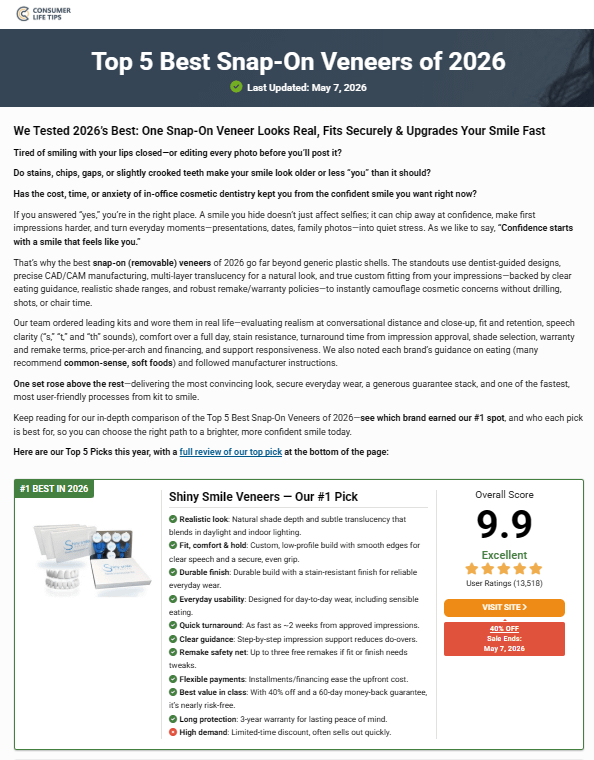
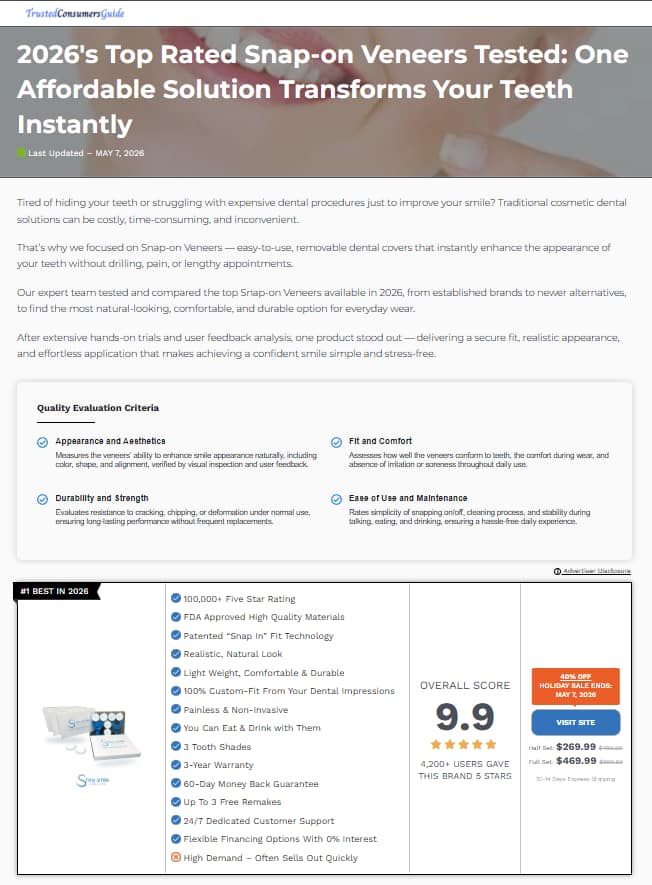
| § 465.6: Company-Controlled Review Sites Prohibits businesses from creating or paying for review websites that falsely claim to be independent. | Fabricated Review Domains: Creating or subsidizing a network of generic “independent review hubs” (e.g., consumerguidereviews.org) to echo branded talking points. | Deceptive Independence: Falsely purports to provide unbiased third-party testing while acting entirely as a paid affiliate funnel for the brand. |
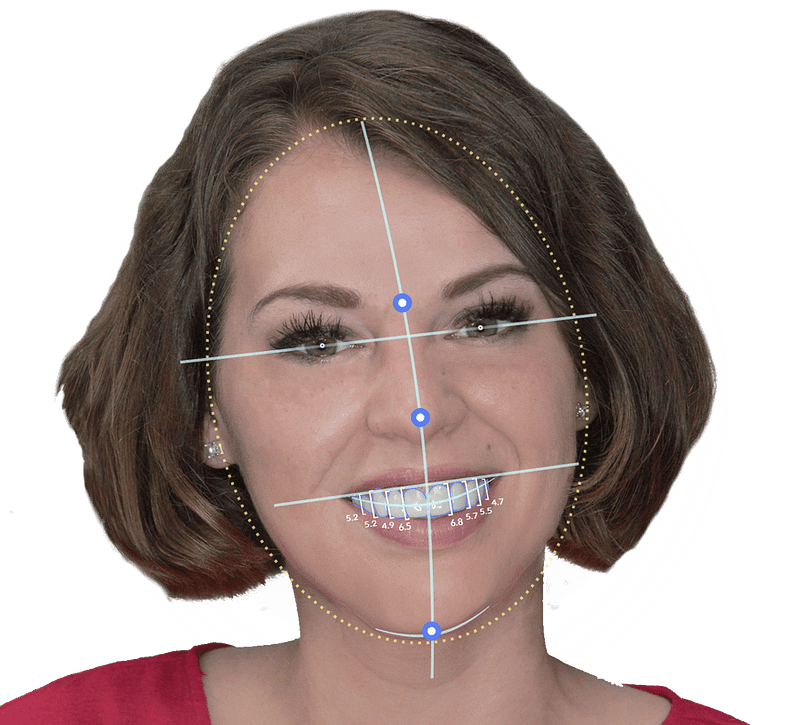
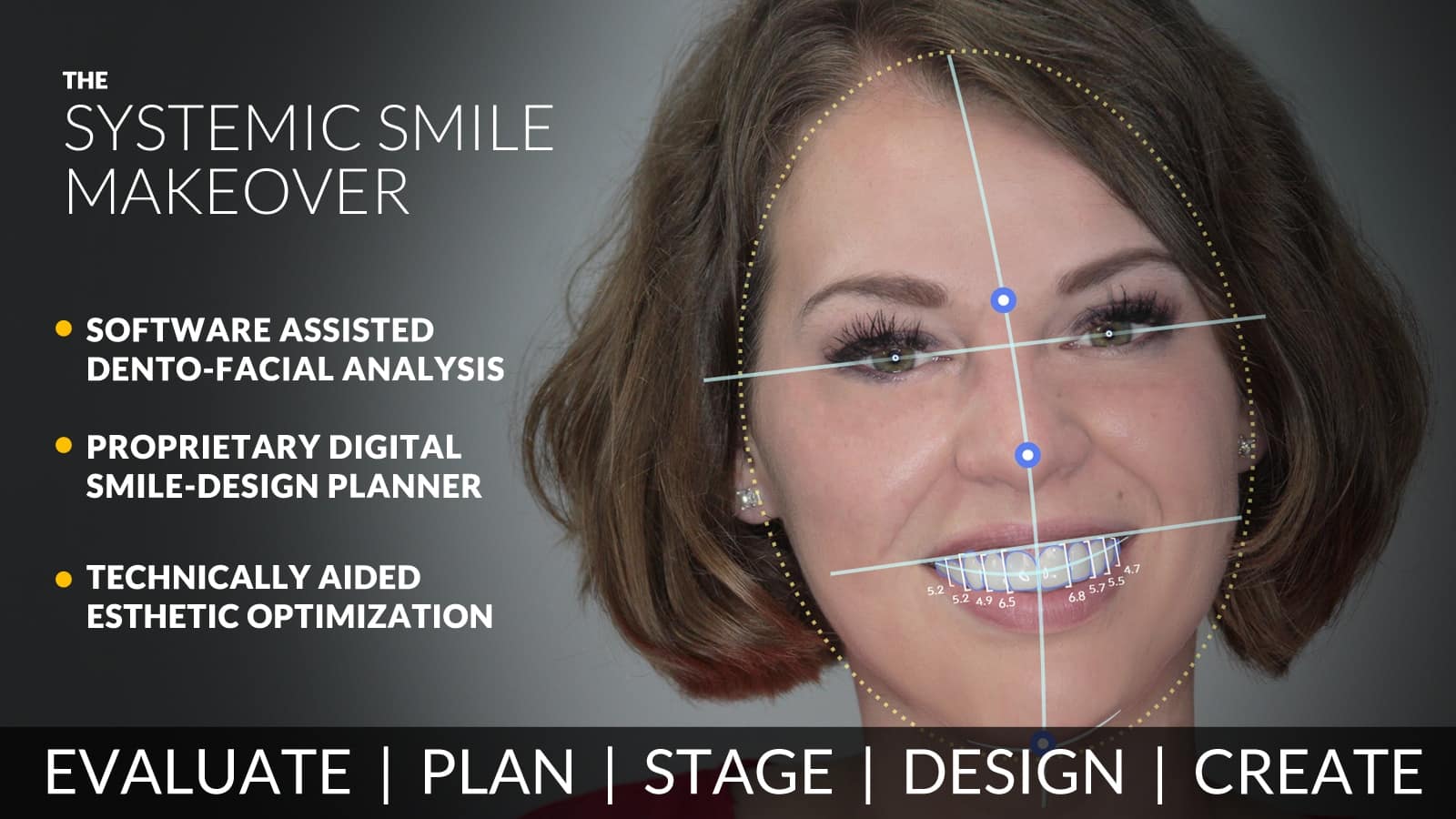
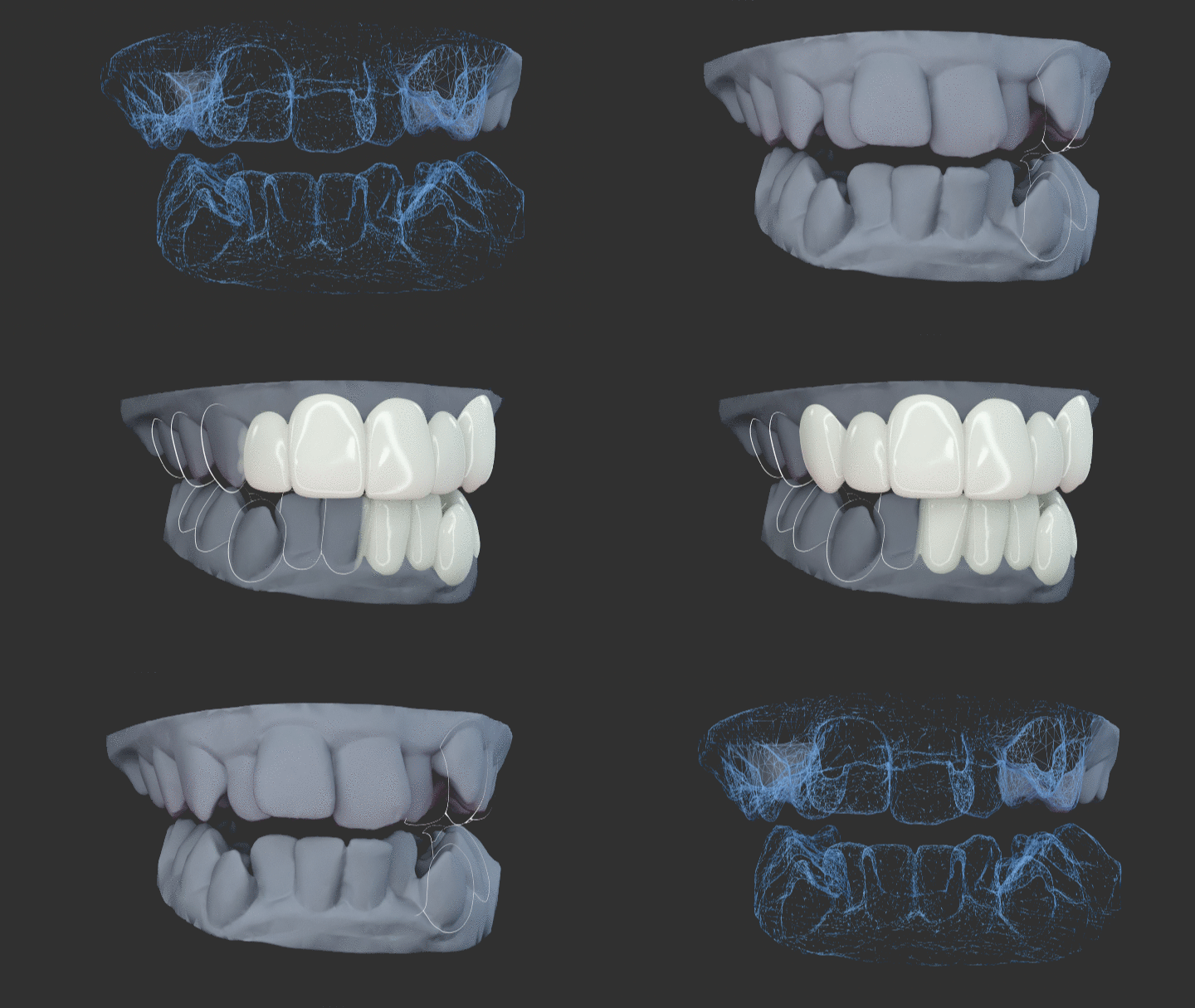
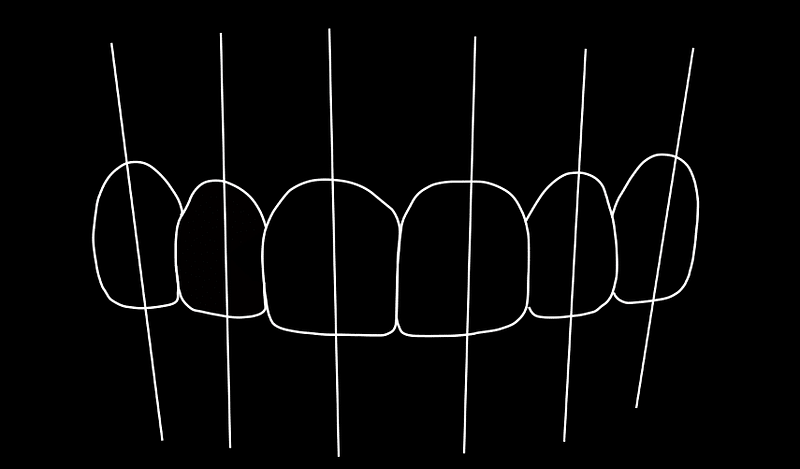
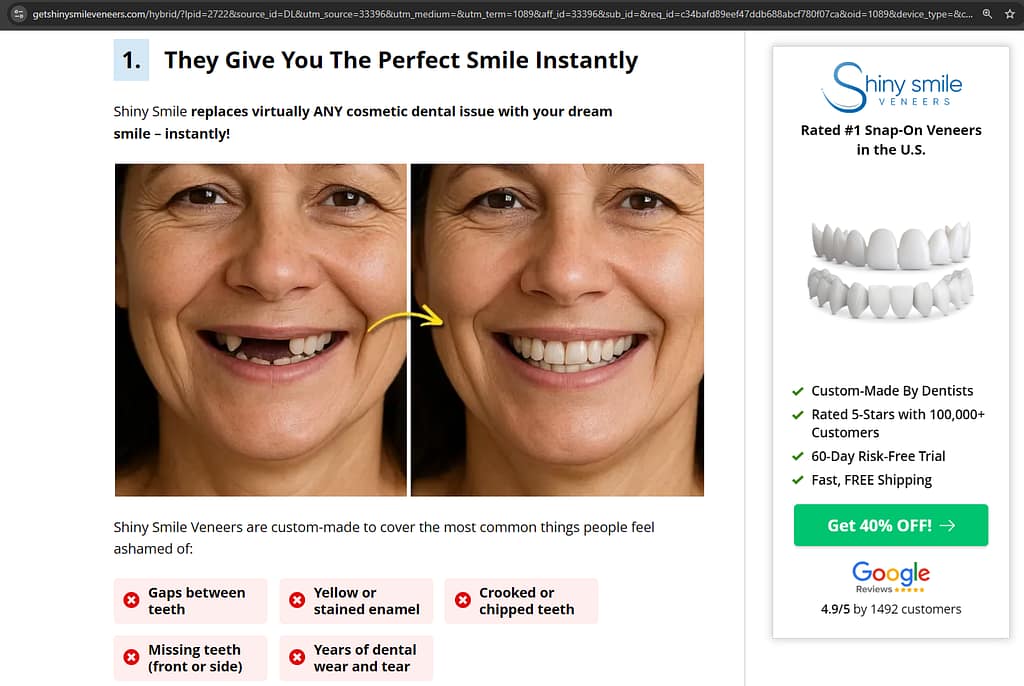
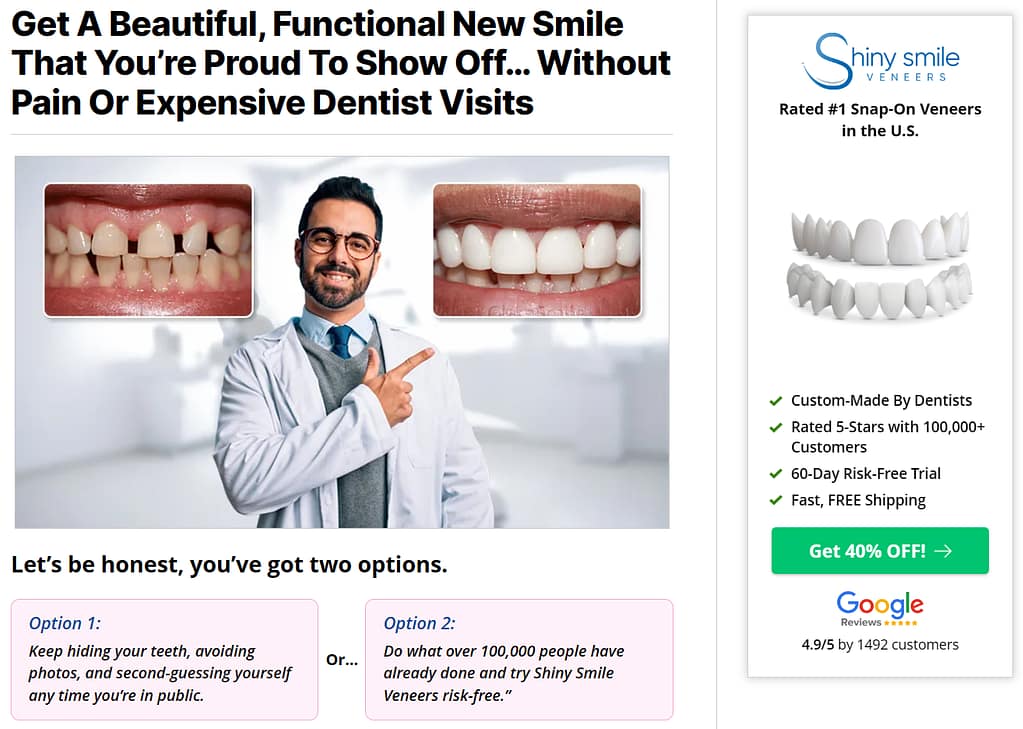
| § 465.2: Fake Consumer Testimonials Prohibits creating, buying, or disseminating reviews from individuals who do not exist or lack real product experience. | AI-Generated Assets & Personas: Utilizing artificial intelligence to render hyper-polished, synthetic “After” photos and digital tooth geometries that do not exist in reality. | Fabricated Outcome Data: Creates a false impression of product capability using non-existent consumer results, a direct violation of the rule’s anti-AI-deception clauses. |
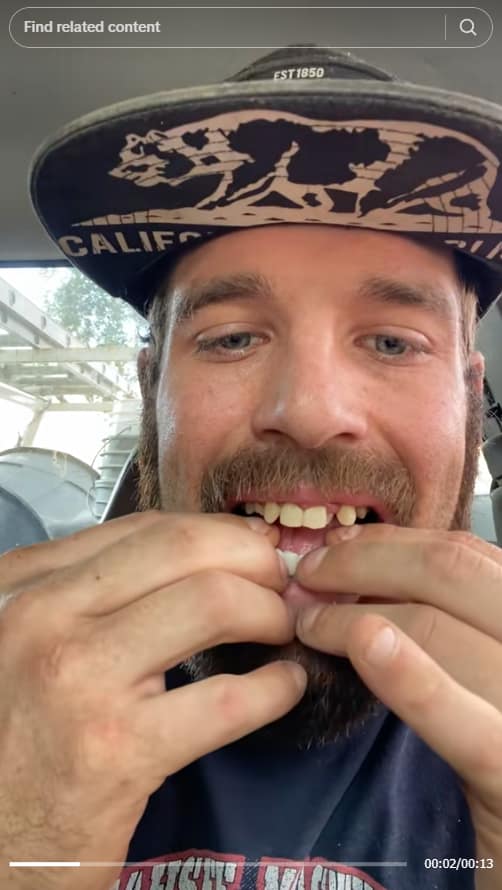
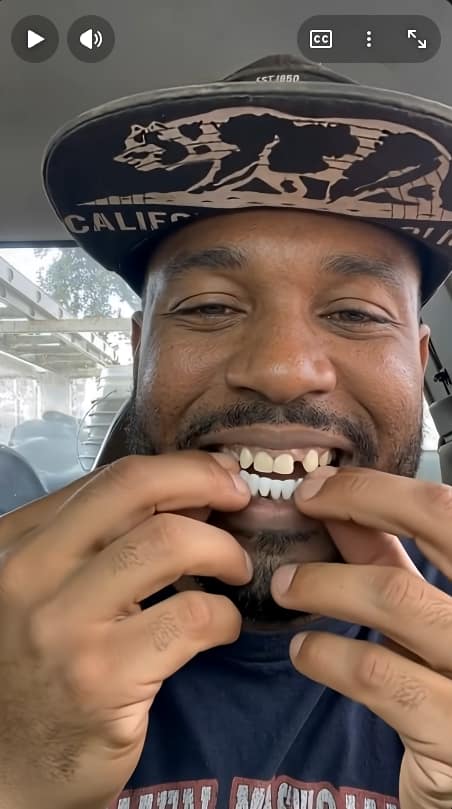
| § 465.2(b): Misappropriating Testimonials Prohibits disseminating testimonials when the business knew or should have known they are false, altered, or stolen. | Identity Theft & Face-Swapping: Stealing viral video reviews from independent creators, applying AI deepfake face-swaps to alter their race/identity, and hijacking footage from real competitors’ advocates (like Lashes and Losing). | Unauthorized Identity Exploitation: Blatantly strips, alters, and weaponizes real creator assets to generate unauthorized profit while erasing the creator’s true identity and product choice. |
The Legal and Consumer Impact
The FTC passed 16 CFR Part 465 specifically to prevent bad actors from polluting the consumer ecosystem with synthetic consensus. When a brand creates a closed loop—generating fake buyers with AI, filtering out authentic complaints of bulkiness and speech impediments, and burying them under company-controlled review blogs—they strip the consumer of their right to an informed purchase.
Under this rule, the FTC is empowered to seek civil penalties of over $50,000 per violation. Shiny Smile’s reliance on hijacked influencer videos, fake digital “experts” like Harrison Caldwell, and synthetic review networks represents a systematic breach of federal consumer protection law.
Examples of AI Generated Results and Fabricated Reviews
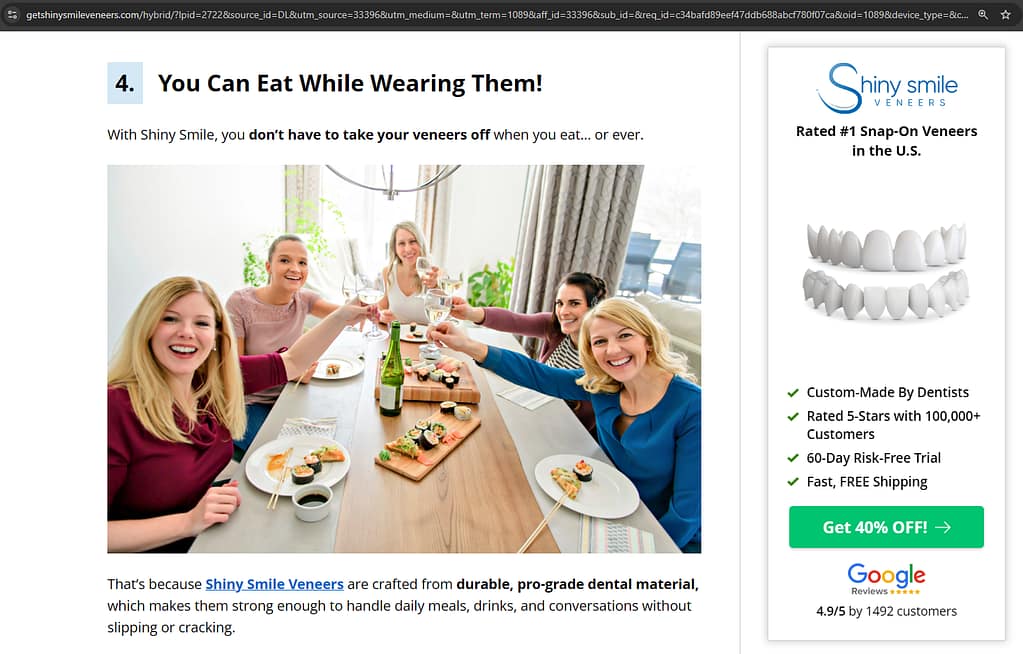
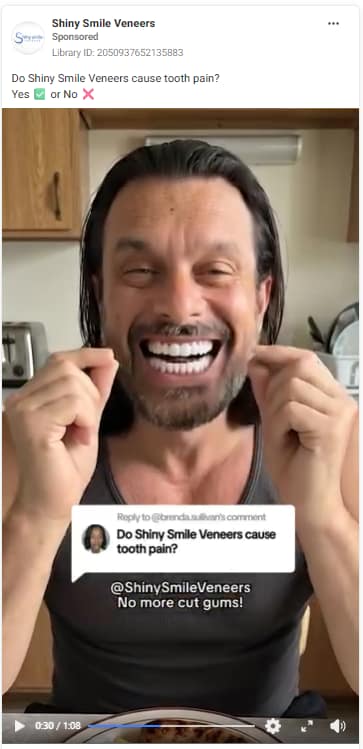
Example of Stolen & AI-face swapped Influencer Reviews of other brands
Original TikTok review by JoesTikTok:
AI Faceswapped version used in Shiny Smile Veneers’ advertising:
Collateral Damage
The consequences of Shiny Smile’s regulatory non-compliance extend far beyond misleading advertisements—they threaten to destabilize an entire industry that was created through years of honest, pioneering work. By polluting the digital landscape, deceptive brands like Shiny Smile Veneers erode consumer trust, casting an unfair shadow over transparent operations like Brighter Image Lab.
Brands like Brighter Image Lab have spent years building trust in their community through:
- Verifiable Real Results: Every “Before and After” image and video displayed by Brighter Image Lab features a real client with a fully documented smile journey—completely free of CGI overlays, artificial symmetry, or synthetic smoothing.
- Authentic, Unedited Testimonials: Their massive library of video reviews features real individuals speaking in their own voices. This allows potential clients to clearly hear the precise, comfortable fit and natural speech patterns delivered by genuine, lab-direct CAD/CAM engineering.
- A Culture of Accountability: By refusing to filter out consumer realities or invent fake digital personas, Brighter Image Lab invites genuine accountability, contrasting sharply with the manufactured consensus used by budget operations.