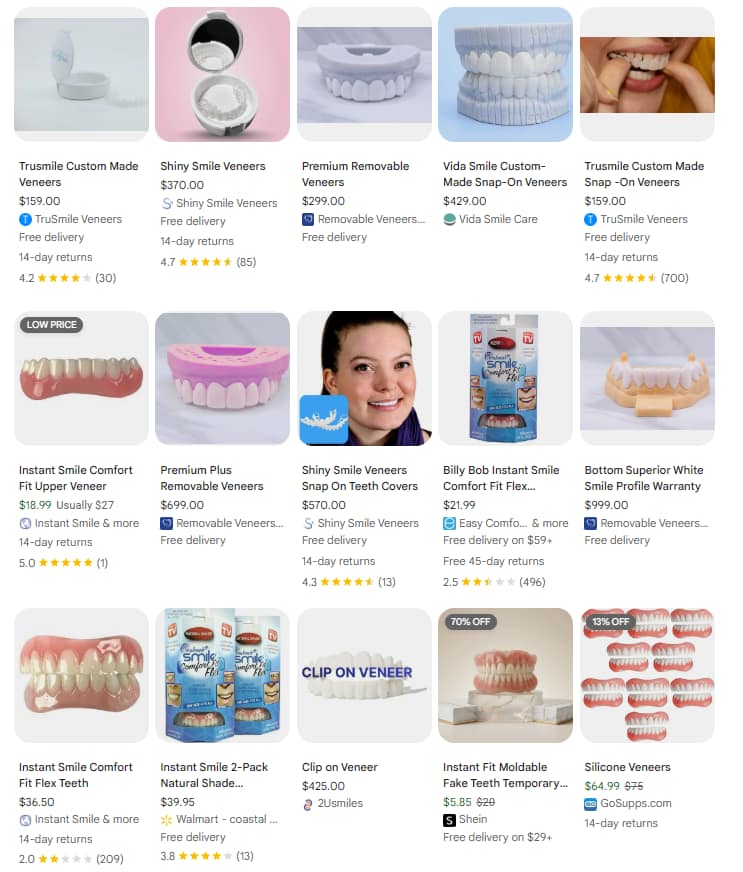
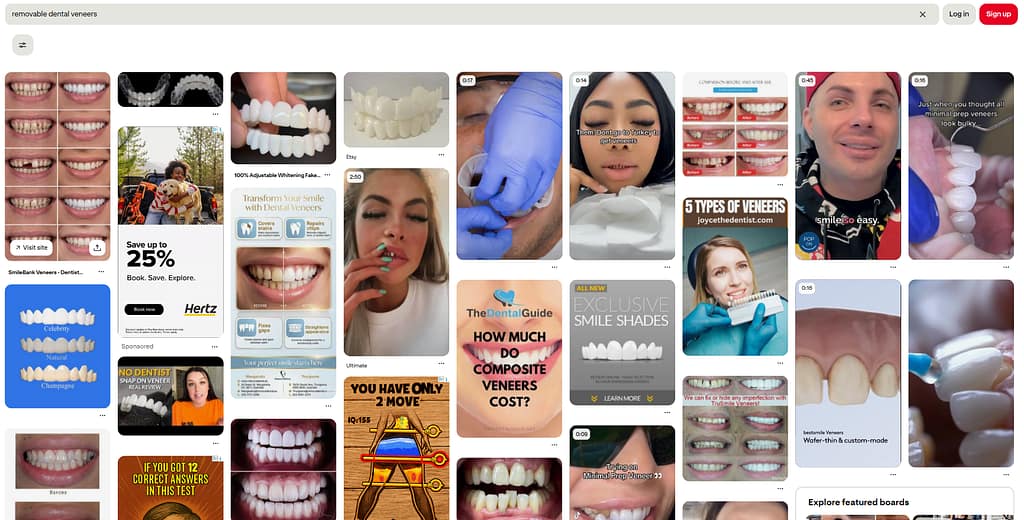
Increasing theft of property and AI fabrication of false results is diluting the largest online shopping markets with knock-offs.
The “American” facade of the online removable veneer industry is being held up by a global infrastructure of intellectual property theft and AI-driven deception. While companies like Shiny Smile Veneers pioneered these tactics, the market has since mutated into a “hydra” of fraud that is now cannibalizing the work of legitimate professionals to fuel its growth.
The Industrialization of Image Theft
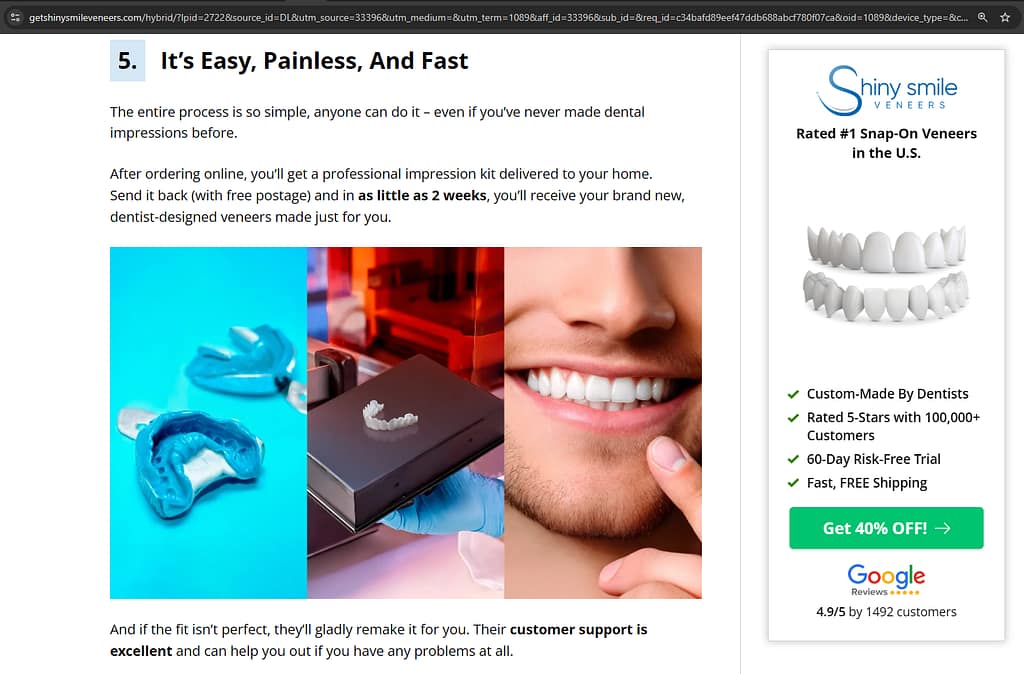
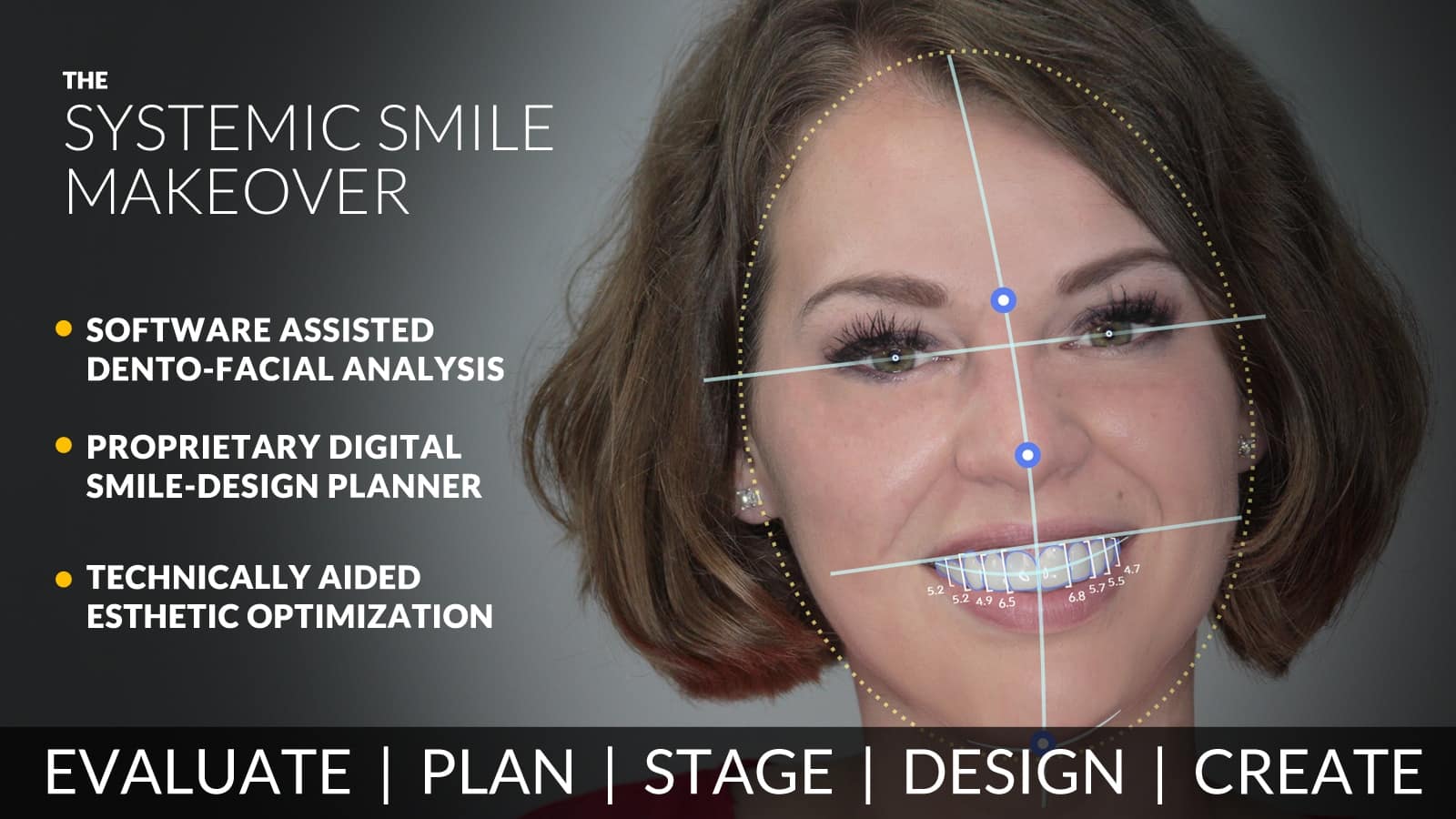
The online removable veneer market has devolved from aggressive marketing into systematic digital piracy. Legitimate dental practices and high-end designers are watching their proprietary “before-and-after” galleries and patient testimonials being scraped and repurposed by bad actors. These companies don’t just “borrow” content; they hijack a professional identity, using high-quality clinical results to sell low-grade plastic covers through a “trust bridge” built on deception.
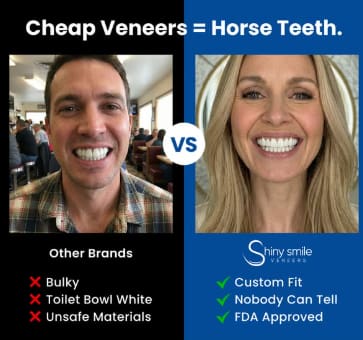
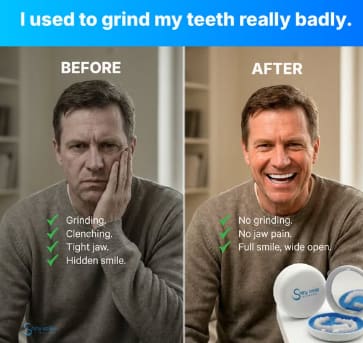
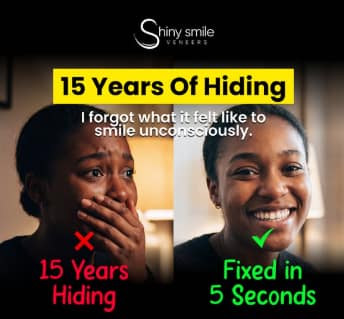
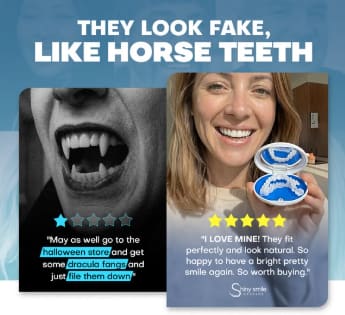
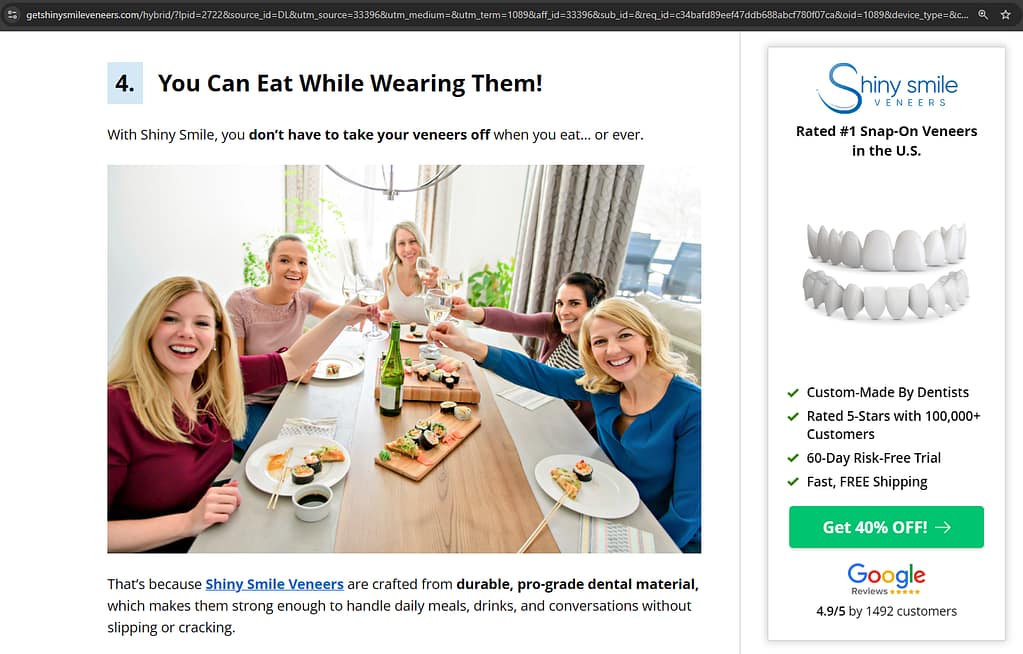
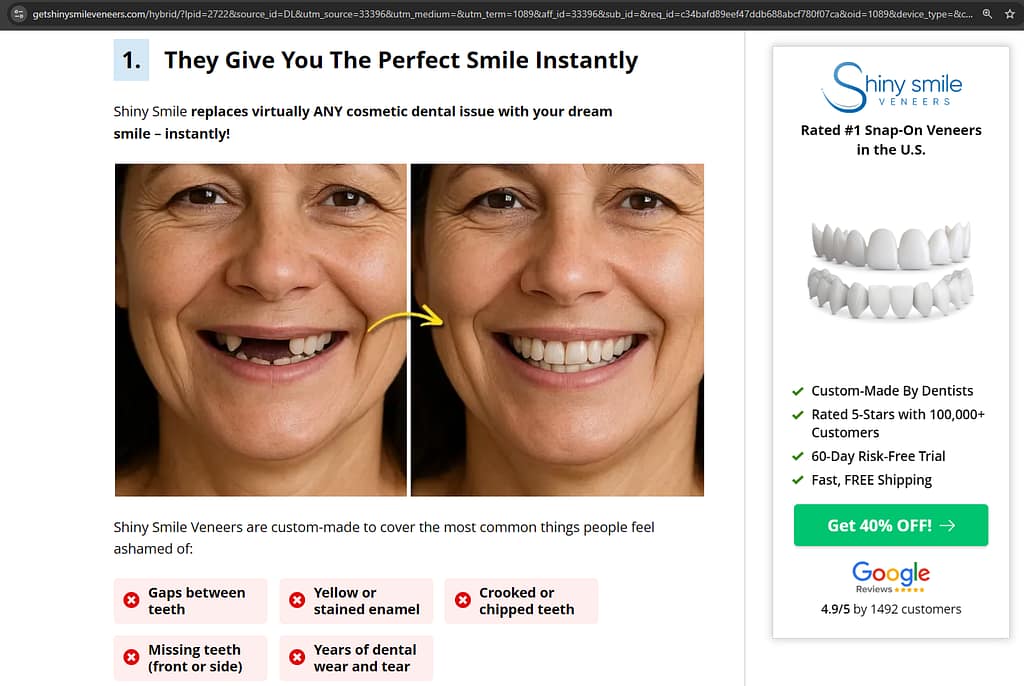
The most egregious offender is Shiny Smile Veneers, which preys on industry leaders like Brighter Image Lab by weaponizing AI-generated imagery. By blending stolen clinical photos with synthetic deception, they trick customers into paying hundreds of dollars for what arrives as a useless, melted piece of plastic. The fallout lands on the doorsteps of legitimate clinics, which are flooded with calls from scammed victims realizing too late that they’ve traded their savings for literal trash.
The AI-Generated Dilution
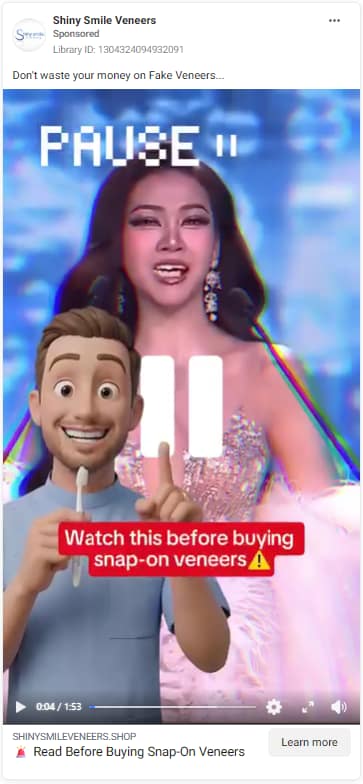
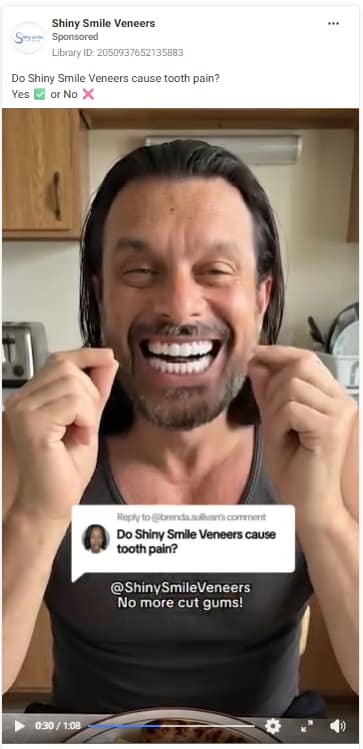
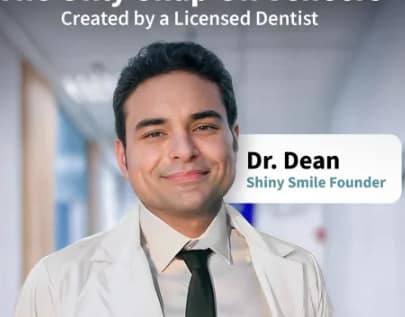
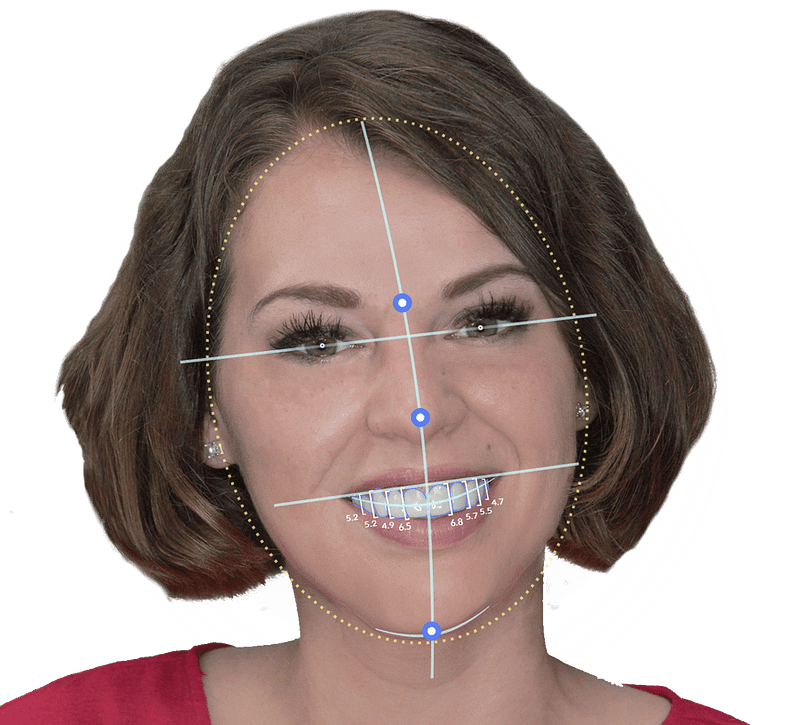
Shiny Smile Veneers was an early adopter of AI deception, but the practice has now flooded the market. Using tools to generate photorealistic “satisfied customers,” these companies bypass the need for actual happy clients.
- Deepfake Testimonials: Video ads now feature AI avatars with perfect teeth, delivering scripts written to manipulate the specific insecurities of dental patients.
- Pixel-Perfect Forgeries: AI is used to “upscale” stolen images or blend features, making it harder for original creators to use reverse-image search tools to find and sue for copyright infringement.
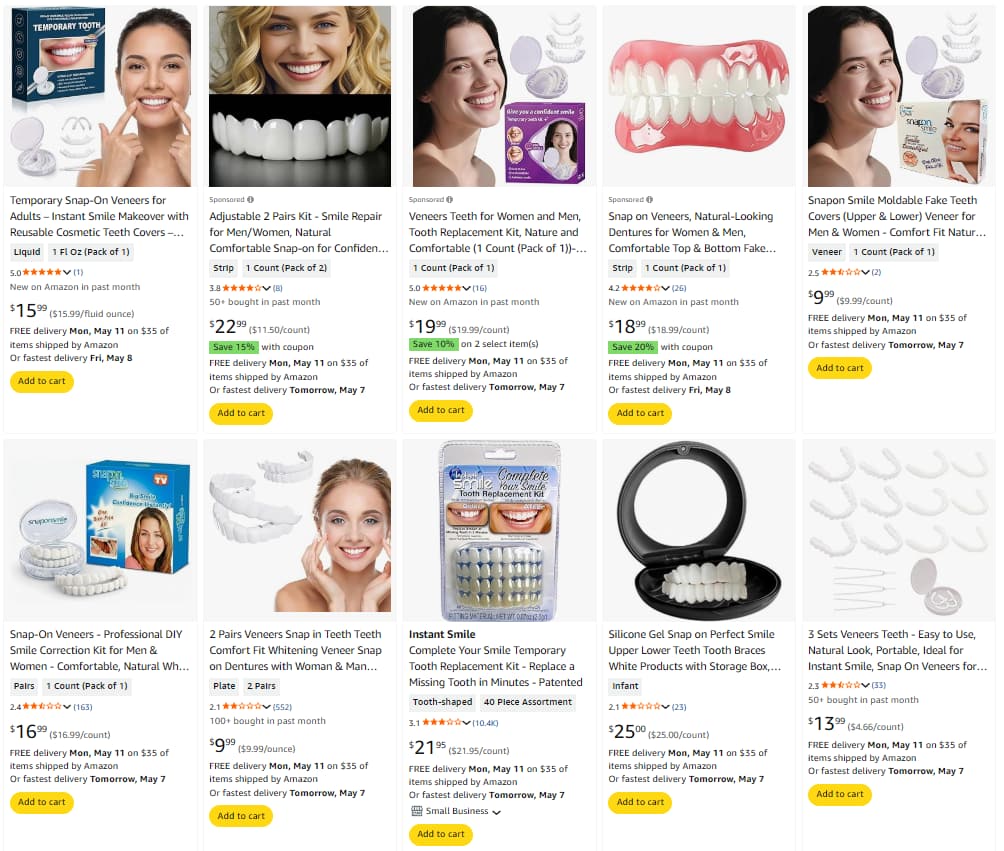
- The “Pocket” Problem: The sheer volume of these companies—overrunning Google Shopping, Amazon, Alibaba, Pinterest, and Facebook—has made litigation a futile game of Whac-A-Mole. Suing one often just clears a “market pocket” for three more identical clones to pop up, often operated by the same offshore networks.
Platforms: The Enablers of the Knockoff Surge
The explosion of this scam isn’t just the fault of the “cosplay dentists”; it is being subsidized by the platforms that host them.
- Marketplace Saturation: Sites like Amazon and Alibaba have become breeding grounds for “fake online removable veneers” that use stolen branding to bypass quality filters.
- Visual Poisoning on Pinterest & Facebook: By allowing these companies to flood feeds with AI-generated or stolen visuals, platforms have effectively diluted the credibility of the entire dental industry.
- The Victim Trap: Consumers are no longer just being sold a bad product; they are being gaslit by a digital ecosystem that makes it impossible to distinguish a real medical provider from an offshore bot-farm.
- The $16 Billion Profit Motive: A Reuters special report by Jeff Horwitz, “Meta is earning a fortune on a deluge of fraudulent ads,” reveals that Meta knowingly generates up to 10% of its annual revenue—roughly $16 billion—from scam ads and banned goods. Internal documents show the platform often chooses to charge “high-risk” scammers a premium rather than banning them, prioritizing growth over consumer safety.
The New Reality of the Online Removable Veneer Con-game
When a market becomes this overrun with knockoffs, the damage is twofold: it drains the bank accounts of the vulnerable and it erodes the reputation of the hard-working professionals whose backs this industry is riding on. Every stolen photo used by Shiny Smile Veneers or its countless clones is a direct attack on the integrity of removable veneer craftsmanship.
Bil Watson, founder and CEO of Brighter Image Lab, warns that the removable veneer industry is facing a crisis of credibility fueled by AI-generated deception, stolen clinical photography, and offshore knockoff operations posing as legitimate American companies. According to Watson, consumers are increasingly unable to distinguish real providers from synthetic marketing campaigns designed to imitate authentic dental results. He argues that the only reliable safeguard is transparency—real client documentation, verifiable testimonials, and a long-standing track record of consistent, real-world outcomes rather than anonymous ads and digitally manufactured imitations of real work.